C H E N G D U
A City That Refuses the Clock
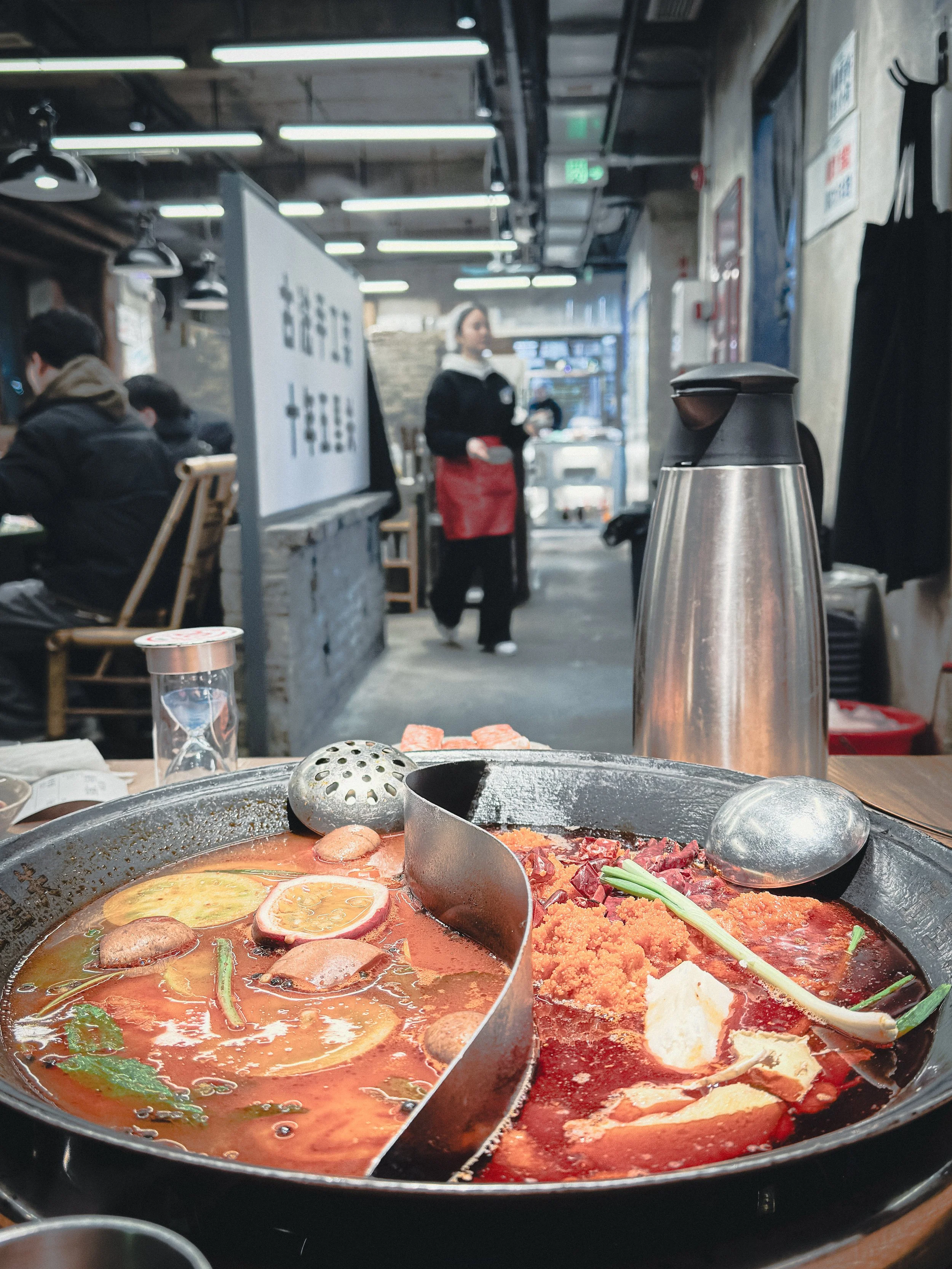
China is not one cuisine—it is a universe. After visiting many Asian cities across Japan, South Korea, and China—always with my wife—one thing becomes difficult to ignore: each Chinese city can feel like landing on a different planet, with its own ingredients, rhythms, and rules of flavor. Thanks to her, I saw Asia not as one idea, but as many distinct worlds. The combinations are often mindblowing—heat with sweetness, numbing spice with freshness, vinegar cutting through oil, textures stacked on textures. It is not simply “good food,” but a different language of taste—one that expands the palate and rewires expectation.
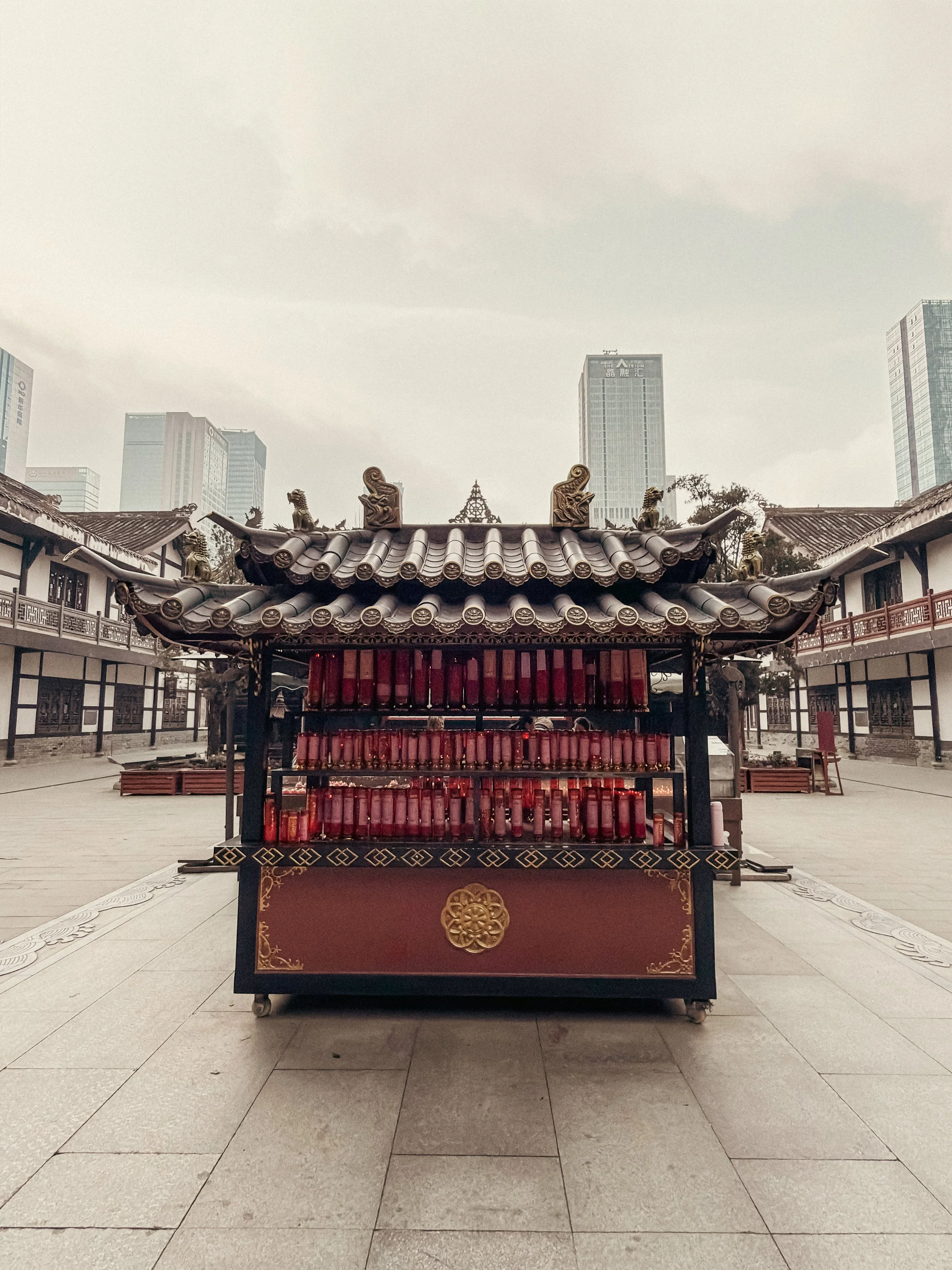
Among these experiences, Chengdu stands apart. It didn’t feel like a checklist destination; it felt like an entry point into something deeper. The cuisine carries an intensity and complexity that can seem unreal, as if the flavors arrived from somewhere beyond familiar reference points. Yes, it is spicy, and the heat demands tolerance at first. But the reward is a kind of awakening: fire with balance, boldness with precision, and depth that lingers long after the meal ends. Chengdu does not merely feed—it resets.
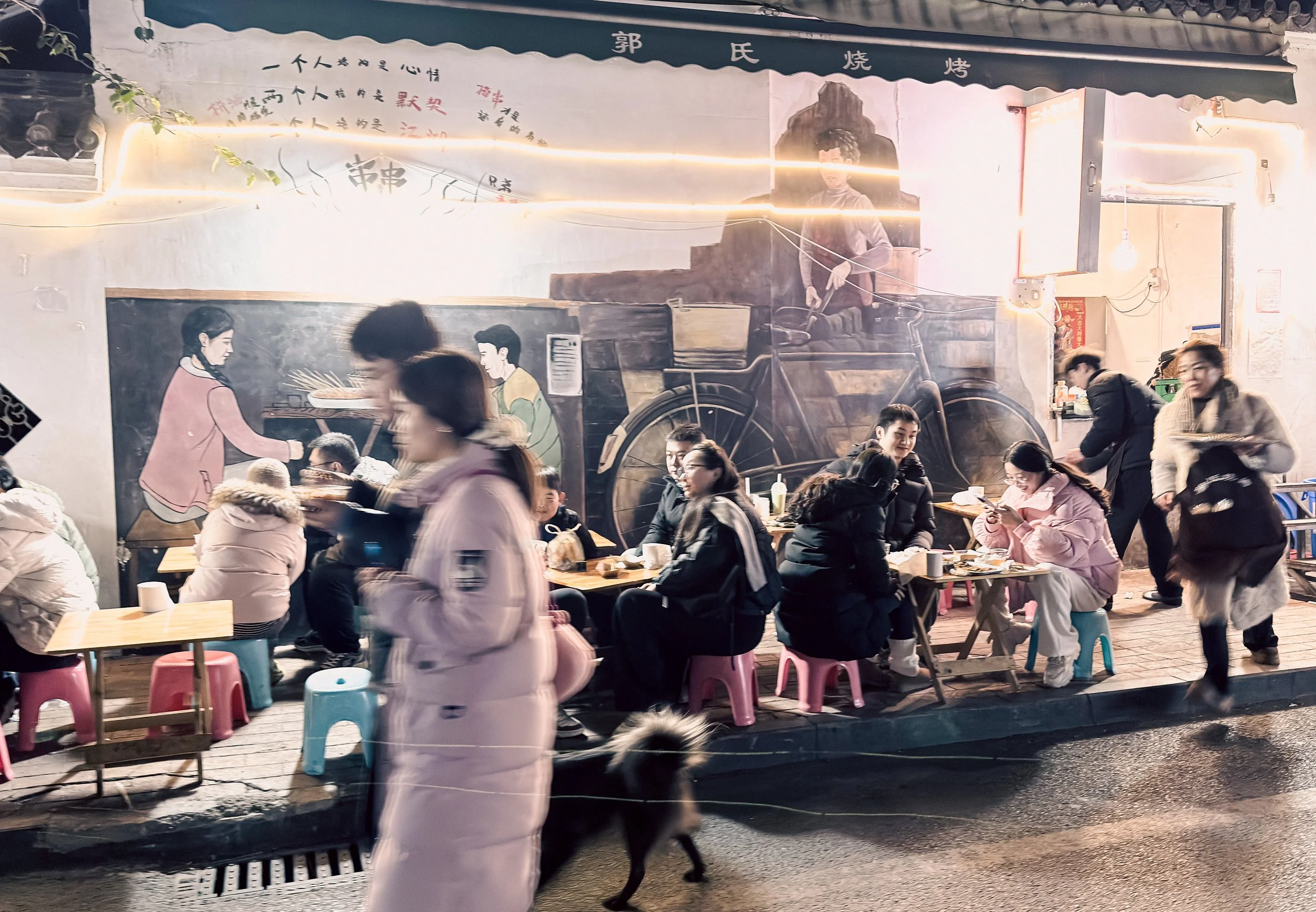
You might think your city knows how to stay awake. That it understands fun, movement, nightlife. But even there, the clock eventually steps in—closing times, last orders, quiet signals that it’s time to go home. Chengdu ignores that logic. Here, fun and nightlife are redefined: raw, modern, uninterrupted. There are no clock-tower moments telling you when the night should end.
Afternoon drifts into midnight, and midnight feels like an extension of dusk. Food glows under street lights, markets breathe, people move without urgency or apology. You eat when you’re hungry, drink when you want, speak loudly, stay longer. The city allows it. Modern, cinematic, and alive in layers, Chengdu doesn’t chase the night. It lives inside it.

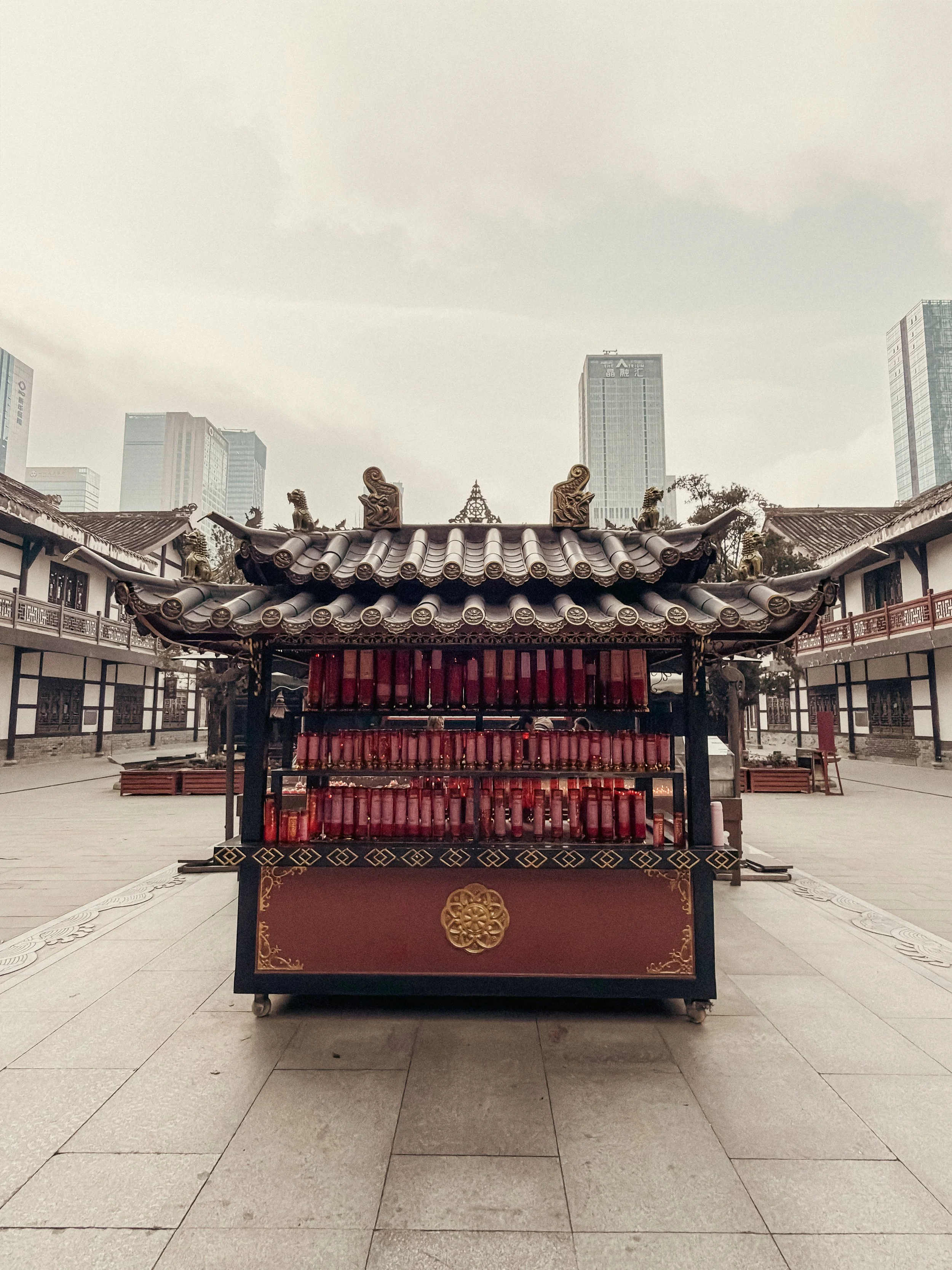
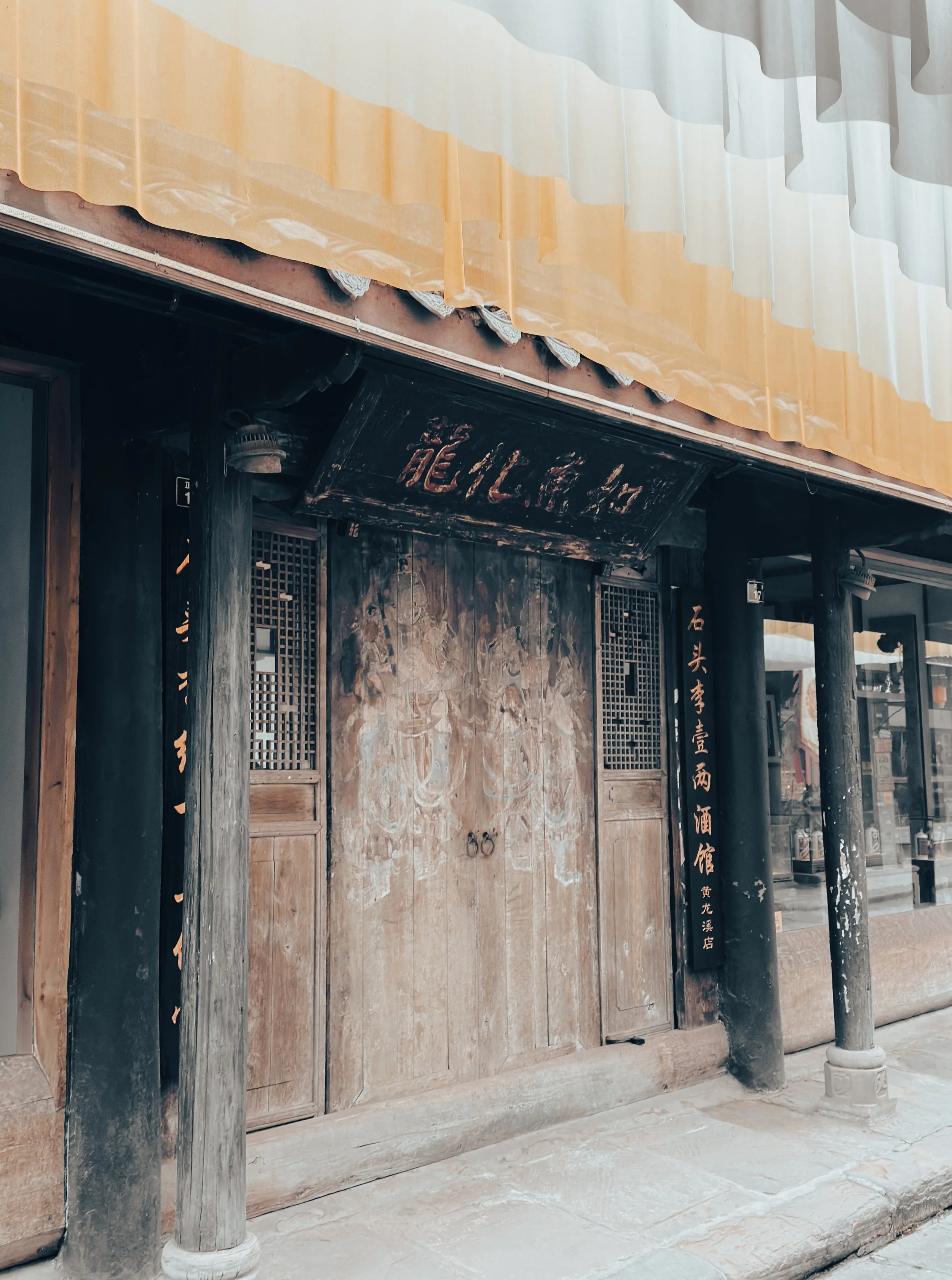
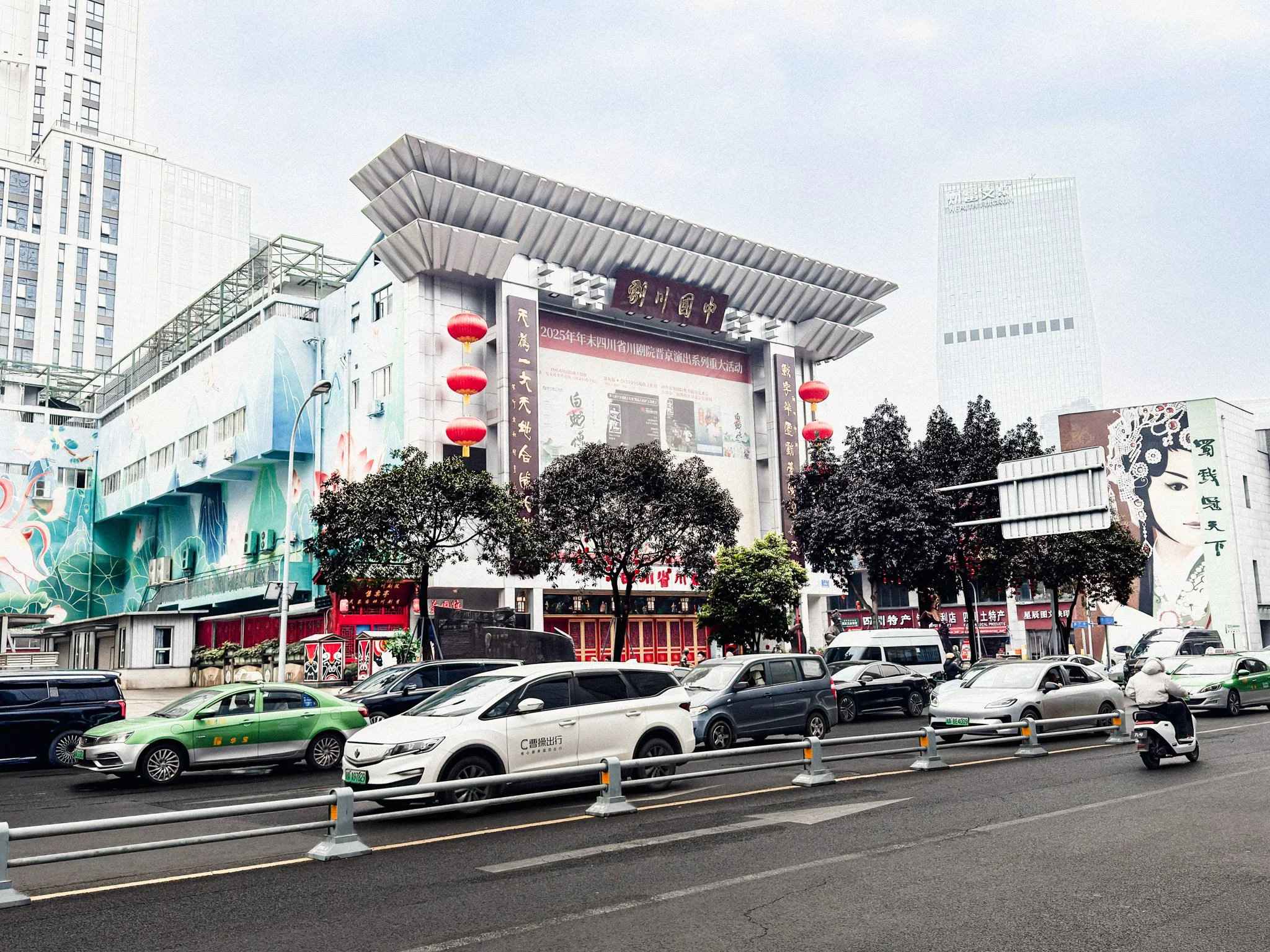
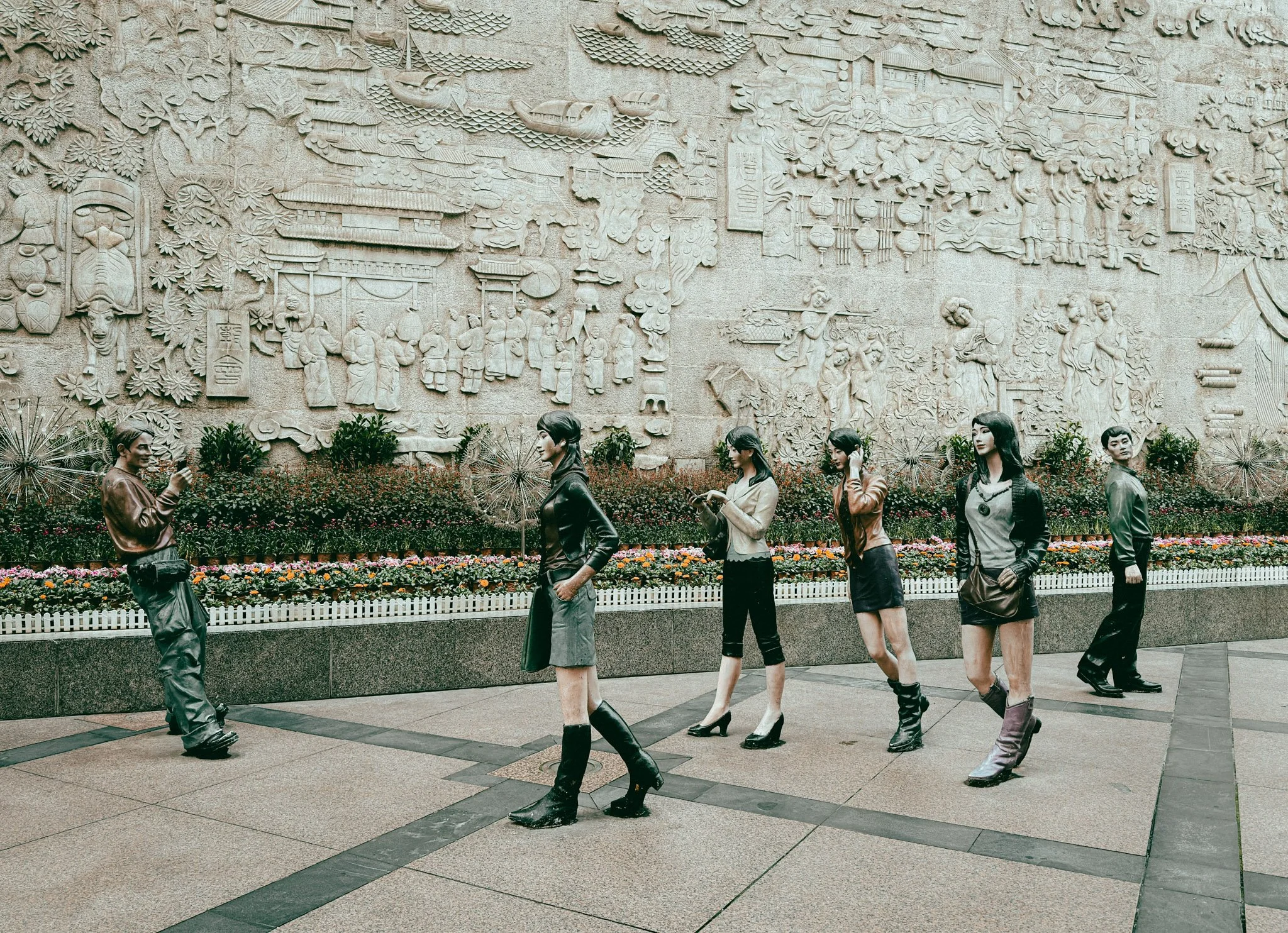
Beyond food, China often challenges Western assumptions about daily life—not through spectacle, but through systems. Many cities operate with extended hours and a high level of logistical integration, where convenience is not treated as a luxury but as baseline infrastructure. On-demand services function at late-night scale, with delivery networks optimized for speed, timing, and reliability. This creates a distinct urban rhythm: fast circulation, continuous access, and an environment built for momentum. The contrast can be immediate—how is this normal here, and why does it not exist back home? In many ways, it feels ahead of its time.
Design and innovation occupy a central role in the contemporary urban environment. What is particularly notable is the rapid transition from concept to execution. Design ideas are frequently experimental and unconventional, and are implemented at speed rather than remaining at the level of speculation. Projects are realized, evaluated in practice, and either sustained or replaced. In this context, the urban public effectively functions as the final arbiter, determining which designs persist and which are discarded.
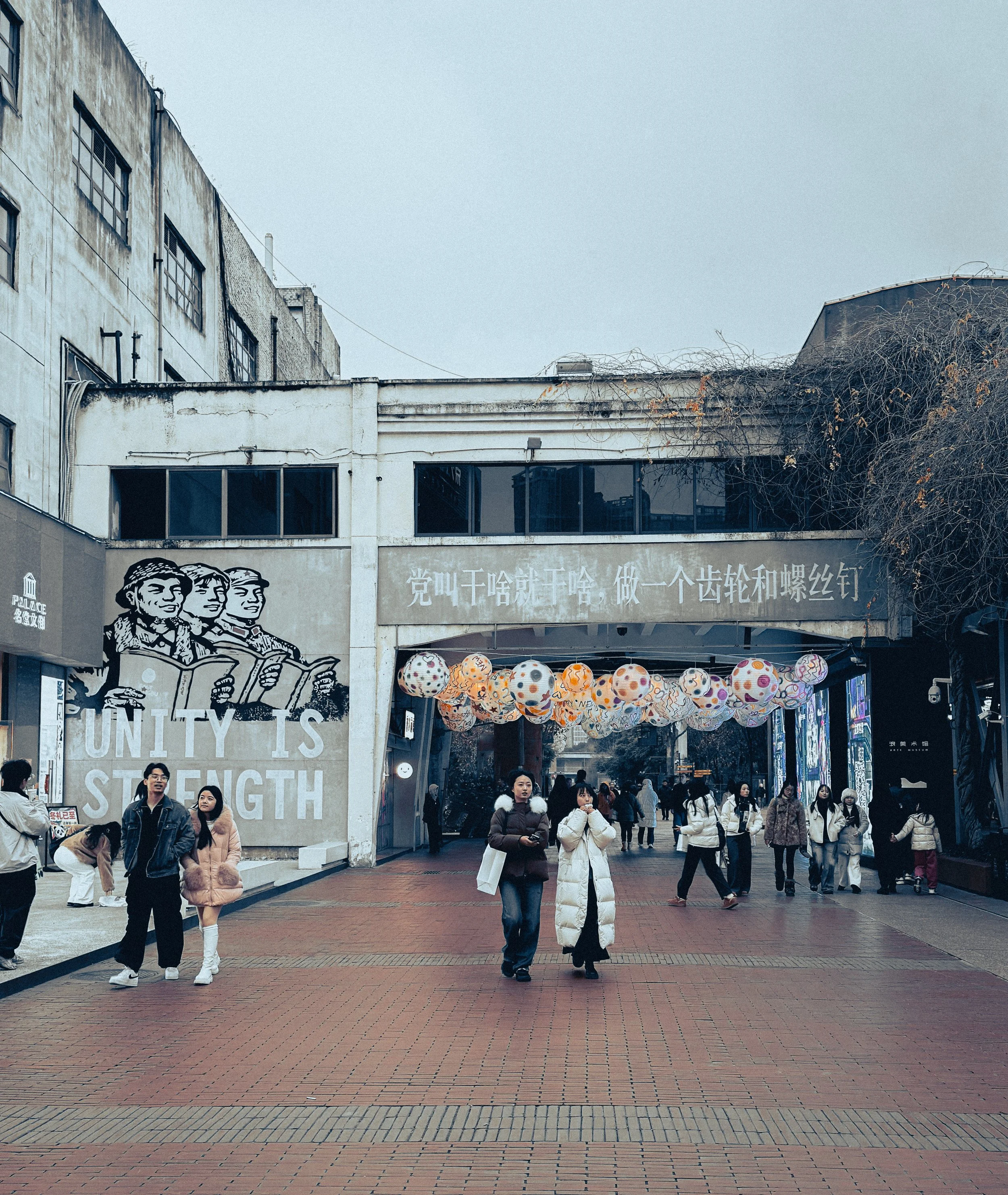
Public space carries the same sense of collective energy. Parks are not background scenery; they function as living social infrastructure. It is common to see older generations gathered in crowds—dancing, exercising, moving with confidence and stamina—occupying the city with visible vitality. Where the West often centers private screens and indoor entertainment, everyday life here remains visibly communal. At the same time, younger generations move through newly built districts shaped by contemporary design, global retail, and image-ready environments. Yet beneath the surface aesthetics, a different message repeats itself: unity, discipline, and forward momentum.
What makes the atmosphere distinctive is the coexistence of innovation and tradition, not as a curated choice, but as a lived default. Respect for elders remains present in public behavior, while heritage is woven into the modern city rather than placed behind glass. The result is an urban identity that moves decisively toward the future while still carrying the past with it—an integration rarely seen at this scale.
That sense of forward motion becomes most tangible at night. A passenger traveling on a high-speed train, moving at 350 kilometers per hour, begins to notice the cities sliding past the window. Some appear so futuristic they feel unreal, as if the landscape has shifted into a video game. Buildings illuminate the darkness in sharp geometries—laser-like boxes stacked against the sky—while Chinese characters glow along highways framed by ultra-modern lighting systems. The palette shifts continuously: deep yellows and reds, occasional light blues, soft whites, dimmed just enough to feel intentional.
Chengdu CHINA - Where food and time move slowly -
like the panda.
At moments it feels untouchable, almost as if the city exists behind glass. Then familiar names appear, followed by others unreadable to the untrained eye. Meaning gives way to form. Language becomes light. Even without understanding the words, the scale and confidence are unmistakable.
As the speed increases, noticing becomes more difficult. Details dissolve before the eye can hold them. The experience turns cinematic—floating above the ground, suspended between earth and space—while cities unfold beneath the train. At that velocity, the city is no longer a place to enter, but an atmosphere to pass through: futuristic, luminous, and constantly moving forward.
In Beijing, hot pot takes a different form—shuàn yángròu (涮羊肉)—a clear-broth tradition centered on thinly sliced lamb, cooked briefly and with precision. Here, the quality of the lamb is paramount. Freshness is non-negotiable: the meat is often cut the same day, and without it, even a well-designed restaurant struggles to compete. Décor and atmosphere matter, as does location, but these factors fluctuate with trends. What remains constant is expectation. For the people of this city, excellence is assumed, and freshness is the foundation upon which everything else is built.
Here, freshness is everything—from vegetables to poultry to meat. “Same day” is not a selling point; it is the baseline expectation. Ingredients move quickly, turnover is constant, and quality is measured in hours, not days. In this context, freshness becomes the true differentiator. Everything else—design, atmosphere, even location—comes second.
It’s as real as it gets. What stands out about this city is that people don’t cut corners. They’re direct, standards are clear, and there’s no unnecessary talk. In markets and food establishments, people genuinely enjoy the exchange. There’s no performance or pretension—just good ingredients, straightforward interactions, and mutual respect.